

_(55267116765).jpg)
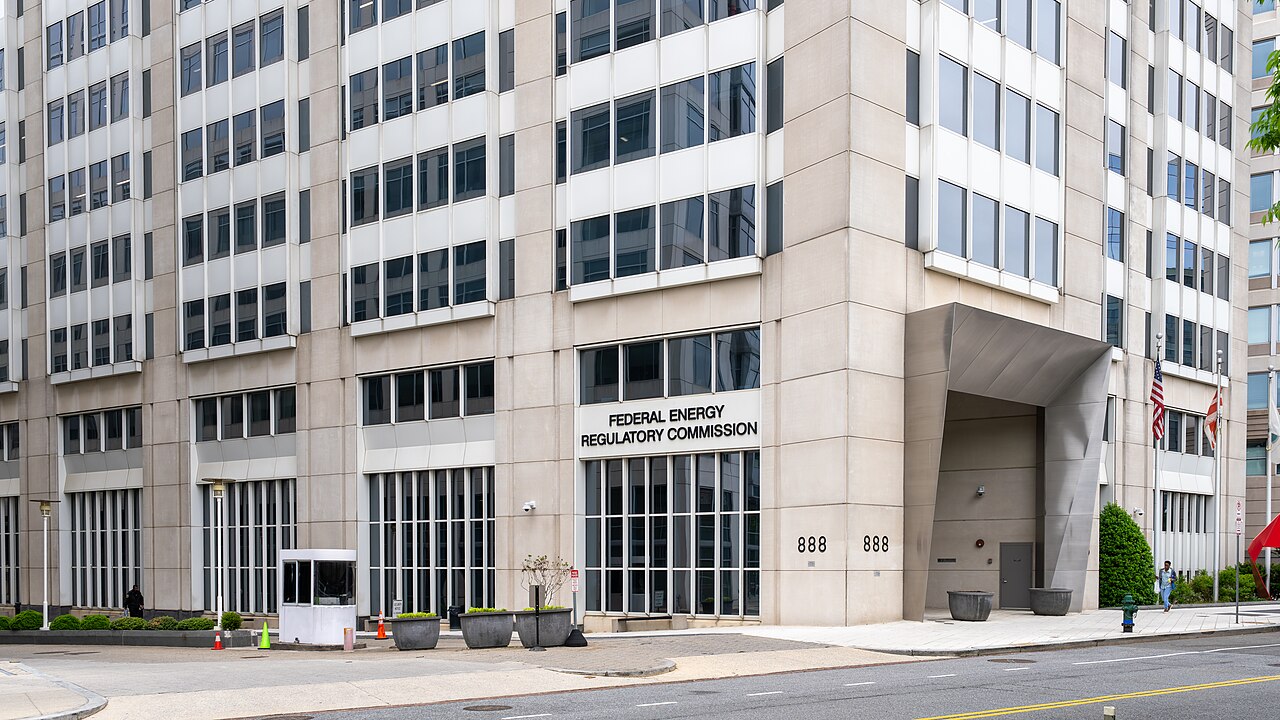
Central Maine Power and Maine Electric Power Co. are asking federal energy regulators to pause a case over their grid-membership incentive until a federal court decides their challenge to Maine law, including any appeals.
The utilities' Oct. 15 motion asks the Federal Energy Regulatory Commission, or FERC, to wait for the lawsuit they filed Oct. 9. They argue that a court ruling on the state law could narrow or eliminate the issues before the commission. The motion is a request to pause the case, rather than an order granting a pause.
The law requires covered utilities to remain in a regional grid organization. State agencies are separately asking FERC to end a financial incentive the utilities receive for membership.
The utilities' Oct. 9 complaint says Maine is trying to change federally approved electricity transmission rates through state law. The allegations have not been decided by a court.
The incentive adds 50 basis points, or 0.5 percentage point, to a utility's authorized return on shareholder investment in covered transmission facilities. That is a component of the rate calculation, rather than a 0.5% charge on a customer's entire electricity bill.
ISO New England coordinates the region's bulk power system. The state law, LD 2038, signed April 6, makes regional membership a condition of owning or controlling covered utility lines in Maine, with exceptions. State agencies argue that utilities required to belong should no longer receive an incentive for joining voluntarily.
What the utilities are asking the court to decide
CMP and MEPCO argue that federal law leaves these transmission rates to FERC. They say the state law conflicts with federal authority, unlawfully takes property rights, impairs their contract with ISO New England and makes ownership of their lines conditional on surrendering federal rights.
Those are five legal claims in the complaint. The companies seek a declaration that the law is invalid and an order preventing its enforcement. They also argue that the incentive originated in a settlement predating the federal incentive policy on which the state agencies rely.
The lawsuit names state utility and energy officials in their official roles. The complaint notes Philip Bartlett II's announced resignation from the Public Utilities Commission and anticipates substitution of his successor under court rules.
The separate request for lower rates
The Maine Public Utilities Commission, Public Advocate's office and Department of Energy Resources filed a Sept. 1 FERC complaint seeking to remove the incentive for CMP, MEPCO and Versant Power and obtain refunds for charges collected after that date. The filing is a request for relief, rather than an award of refunds.
The utilities' Sept. 21 answer asks FERC to reject the complaint. They argue that the agencies have not shown the overall rates are unreasonable and that the New England incentive arose under a different legal framework from incentives removed in Ohio and California.
In an Oct. 6 response, the Maine agencies say the state can require grid membership while leaving rate decisions to FERC. They argue that the earlier approval does not give the utilities a permanent right to the incentive and that the membership requirement does not cancel their entire agreement with ISO New England.
In their pause request, the utilities also challenge the agencies' account of the incentive's effect on ratepayers and say resolving the state law's legality first would avoid conflicting decisions. Those are the utilities' arguments; FERC's public search through Oct. 16 lists the motion and does not show an order granting it.
How much customers would receive depends on the rate calculation and any order FERC issues. The agencies' filing acknowledges that limits on authorized returns and other incentives can affect the value of removing this particular incentive.
ISO New England's Sept. 18 motion asks FERC to dismiss it as a party because it administers billing and has no financial interest in the incentive. It takes no position on the merits and says it would implement an order, including refunds if required. The motion itself does not resolve the case.
A public copy of the federal court docket, last updated Oct. 15, lists the complaint, exhibits and procedural filings through Oct. 13. It does not show a ruling on the merits. That copy may lag the official court record.