

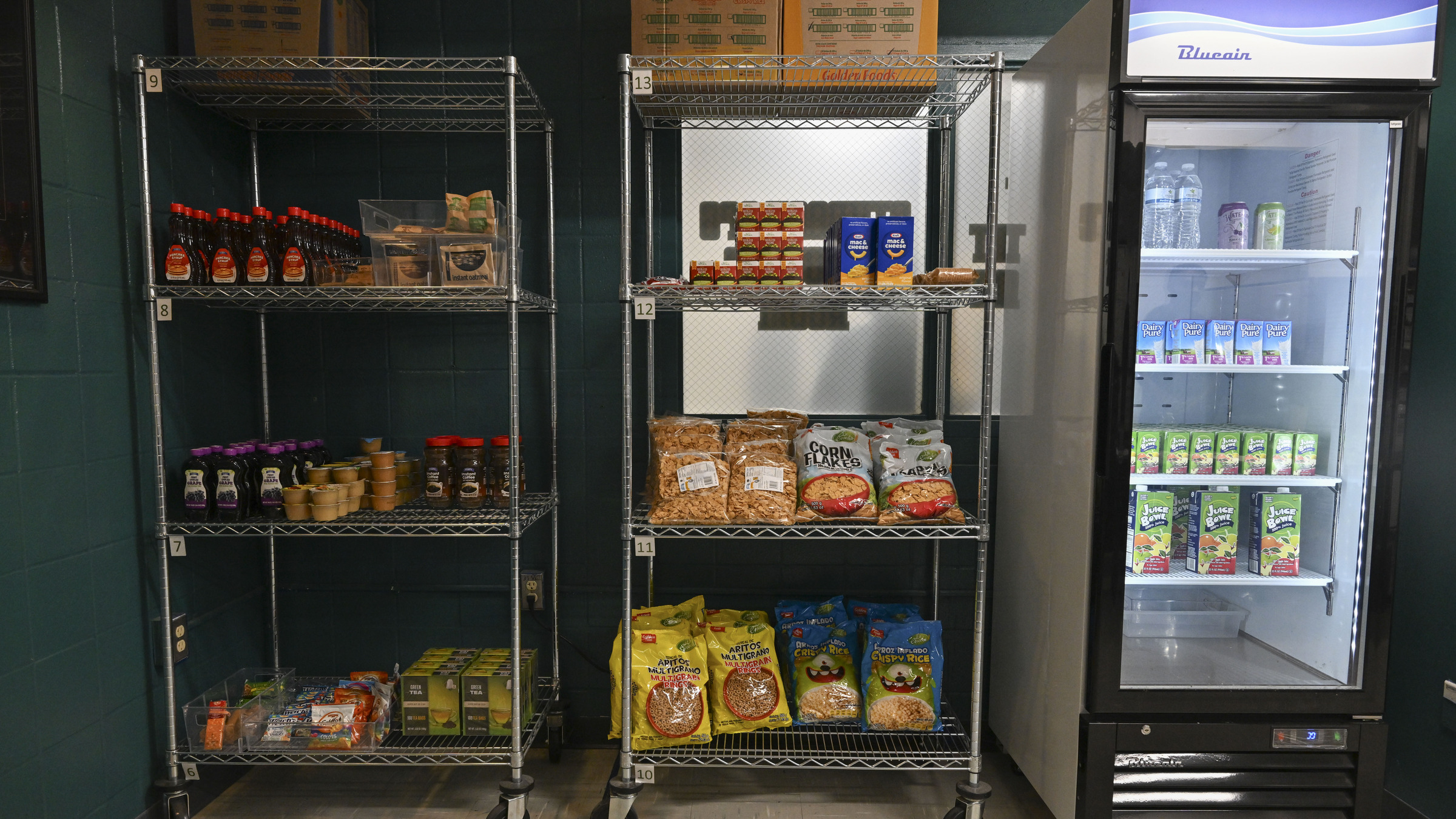
The Healey-Driscoll administration has awarded nearly $500,000 to 30 Massachusetts colleges and universities through the Hunger-Free Campus Initiative, the Department of Higher Education announced Nov. 20. The state estimates the grants will support more than 43,000 students across all of its public higher education institutions and two federally defined Minority Serving Institutions, Franklin Cummings Tech and Urban College of Boston.
The grants are funded through the fiscal 2027 state budget and support projects such as food pantries run with regional food banks, food lockers with anytime access to prepared food, on-campus EBT grocers and expanded meal plan access. All 30 eligible institutions submitted proposals, and each school's amount was set using factors such as enrollment and financial need.
UMass Boston received the largest award, $41,789.55, followed by UMass Amherst at $40,989.19, Bunker Hill Community College at $36,491.02 and Bristol Community College at $30,593.24. The smallest was Massachusetts Maritime Academy at $2,178.59. Other UMass campuses received $27,832.40 (Lowell) and $17,998.39 (Dartmouth).
The 15 community colleges received a combined $254,918.48, the nine state universities listed $103,602.09, the four UMass campuses $128,609.53 and the two Minority Serving Institutions $5,369.88, by Six State Signal's addition of the amounts in the release. Those figures total $492,499.98.
Gov. Maura Healey said in the release: "No college student should have to worry about where their next meal is coming from while working toward their degree." She also noted the administration's proposed $41.5 million in supplemental budget funding for Department of Transitional Assistance caseworkers and technology upgrades to keep people enrolled in the Supplemental Nutrition Assistance Program.
Kate Adams of The Greater Boston Food Bank, which leads the Hunger Free Campus Coalition, said in the release that the food bank's most recent Food Access Study found 60 percent of low-income college students in Massachusetts experienced food insecurity in 2025.