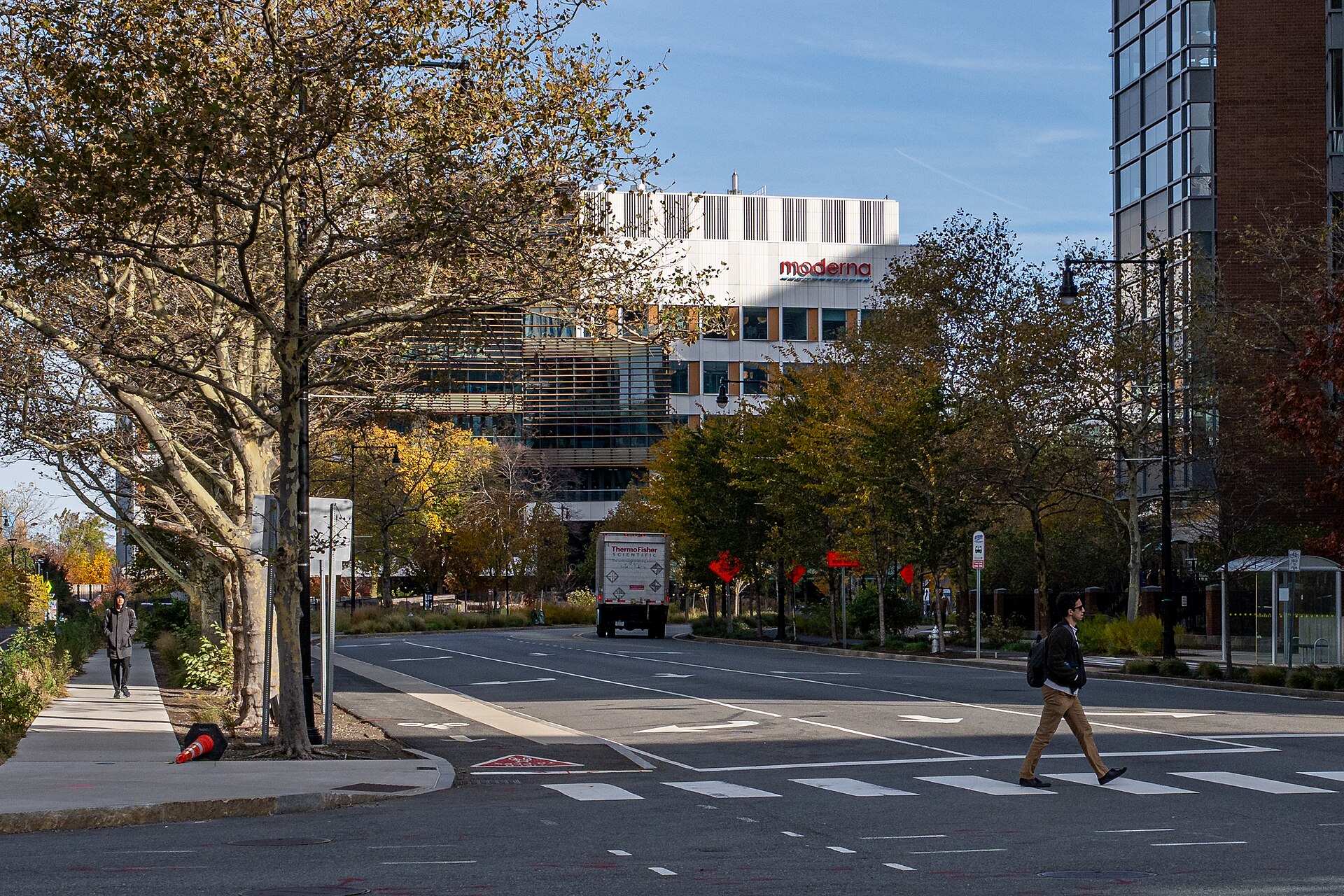
Moderna, the Cambridge vaccine maker, earned $162 million in the third quarter, a turn from a $200 million loss in the same quarter of 2025, the company said in its earnings release filed with the SEC on Nov. 6. It also raised its forecast for 2026 sales growth to 15% to 25%, up from a previous outlook of up to 10%.
The profit follows a large first-half loss. Over nine months, Moderna has a net loss of $1.963 billion, compared with $1.996 billion in the same period of 2025. By subtraction, the first two quarters of 2026 lost about $2.125 billion, against about $1.796 billion a year earlier.
What drove the quarter
Revenue rose 29% to $1.3 billion from $1.0 billion. Moderna attributed the increase mainly to higher COVID vaccine sales in international markets, supported by deliveries under long-term government partnerships. Revenue was $780 million in the U.S. and $533 million internationally.
Costs moved in different directions. Research and development spending was $583 million, down 27%, which Moderna tied to winding down certain late-stage infectious disease studies and cost efficiencies. Cost of sales rose 54% to $318 million on higher sales volume and manufacturing costs. Selling and administrative costs rose 5% to $282 million. Total operating expenses fell about 7%, to $1.183 billion. Moderna now expects about $2.7 billion in research spending for the year, down from about $2.9 billion.
The settlements
Two legal matters appear in the release, and they are separate. The first is a litigation settlement announced in the first quarter of 2026. The release says Moderna paid $950 million toward it during the third quarter. It separately says the company's 2026 cost of sales, expected at about $1.7 billion, includes a previously announced $0.9 billion non-recurring litigation settlement charge. Nine-month cost of sales was $1.366 billion, up from $416 million a year earlier. The release does not name the other party to the first-quarter settlement.
The second is an agreement on Oct. 28 with the drugmaker GSK, settling all disputes between the two companies pending in the United States and Europe. Under it, each side gets patent licenses from the other in infectious disease, and neither is obligated to pay the other for those licenses. The release does not say what the disputes were about.
Cash and products
Cash and investments were $8.0 billion on Sept. 30, up from $6.9 billion on June 30. Moderna credited $2.6 billion in net proceeds from a September convertible notes offering, which are debt that can convert into shares, partly offset by the $950 million payment. It expects to end 2026 with $8.1 billion to $8.3 billion, compared with a prior range of $4.7 billion to $5.2 billion.
The company says the FDA approved its seasonal flu vaccine, mFLUSIVA, in August for adults 50 to 64, with accelerated approval for adults 65 and older. In October, Moderna and Merck presented Phase 3 results for an experimental melanoma treatment, intismeran autogene, combined with Keytruda. In patients with high-risk melanoma after surgery, the combination reduced the risk of recurrence or death by 42% compared with Keytruda alone.
Moderna holds an analyst day on Nov. 12.