Brown University has asked the Providence City Plan Commission to approve a campus heating hub and a 56,000-square-foot economics building on College Hill, and city planning staff recommend approval. The commission votes Tuesday, Nov. 17, at 4:45 p.m. at the Joseph Doorley Municipal Building, 444 Westminster St.
The request is an amendment to Brown's 2023 Institutional Master Plan. The staff report says Section 1910 of the zoning ordinance requires colleges and universities to file such a plan describing development over five years or more and allows amendments. The staff recommendation carries one condition: Brown must work with the city engineer to carry out the traffic-calming suggestions in its traffic memo.
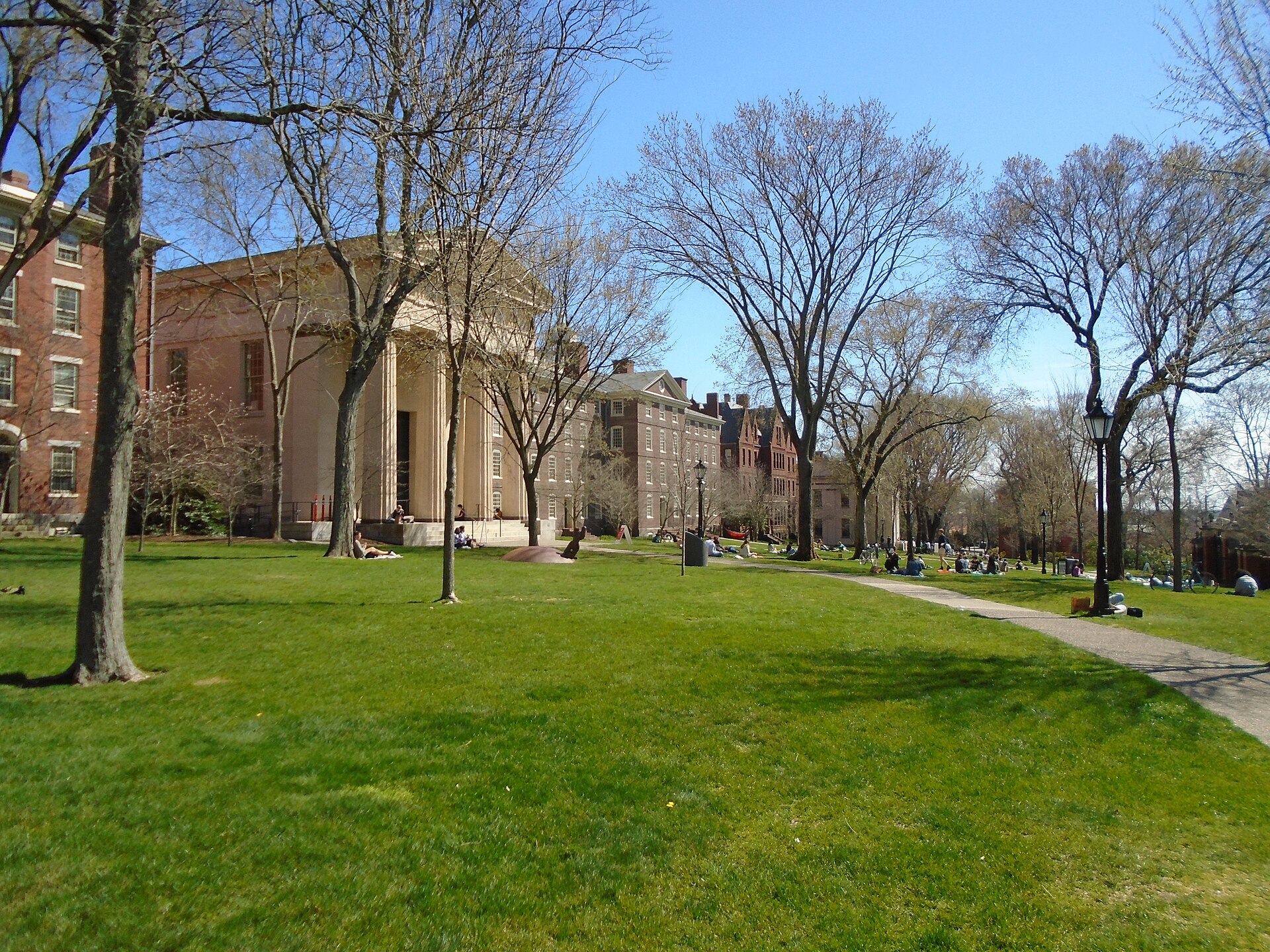
The central thermal energy hub would be an addition to Page-Robinson Hall. Brown's filing calls it the centerpiece of the first phase of a Sustainable Thermal Energy Program, a campus heating network that would move from natural gas toward full electrification. Brown says the first phase would cut campus greenhouse gas emissions by an additional 8 percent to 10 percent and supports its 2040 net-zero goal. Brown is seeking approval for either of two designs: a ground-based addition of up to 14,000 gross square feet on the Angell Street side, or a rooftop structure. The rooftop option needs a dimensional variance, and Brown says it would file a separate application with the Zoning Board if it chooses that route.
The economics building would stand on the block bounded by Benevolent, Hope, Charlesfield and Brook streets. Brown says the department is now spread across five buildings, and the site was chosen for its proximity to the Watson School of International and Public Affairs. The building would have up to four stories.
The site requires moving or removing existing buildings. Brown plans to demolish 75 Charlesfield St., built in 1967 as Memorial Hall for Bryant College, which houses its Department of Public Safety and Emergency Management. That department would move to two new locations. Brown would relocate 71-73 Charlesfield St. to the vacated site and offer 277 Brook St. and 281-283 Brook St. for sale to buyers willing to move them. If no buyer comes forward, both would be offered to organizations for architectural salvage before demolition. Brown would restore 287 and 291 Brook St., Second Empire houses built in 1886 by Alexander Gorham, an African-American real estate developer. The filing says the Brook Street houses are in the College Hill National Register Historic District but not in the National Historic Landmark District or the city's local historic district.
Brown's traffic memo, as summarized by staff, finds that service levels at nearby intersections would stay largely unchanged. The economics building site would lose 47 parking spaces. Brown would replace them in the garage at 111 Power St., which has 410 spaces; the study counted 46 vehicles there at the afternoon peak. The memo suggests making the Brook and Benevolent street intersection a four-way stop for the added pedestrian traffic.
Brown listed 11 meetings in its public engagement process between June 23 and Oct. 14, including two Brown-hosted community meetings and sessions with the College Hill Neighborhood Association and the Thayer Street District Management Association. The commission agenda says written comments should arrive at least 24 hours before the meeting, and comments received after noon on the day will not be considered.