Connecticut state agencies have cut their greenhouse gas emissions 36.3 percent below fiscal year 2019 levels, passing the 2030 target for state agency operations several years early, according to GreenerGov figures cited in a Nov. 10 release from Gov. Ned Lamont's office.
Emissions fell an additional 10 percent from fiscal year 2024 levels. The governor's office attributed the reductions to more clean electricity, less fossil fuel use, more renewable generation and changes to building operations and energy management. The next GreenerGov milestone is a 70 percent cut below 2016 levels by 2040.
Lamont called reaching the target early "an extraordinary achievement." Joshua Wojcik, secretary of the Office of Policy and Management, said the program has produced "millions of dollars in utility savings." The release gives no total dollar figure and no absolute emissions numbers.
GreenerGov was created by Executive Order No. 1 in 2019 and expanded by Executive Order No. 21-3 in 2021. It asks state agencies to reduce emissions, improve energy efficiency, conserve water, divert waste, expand renewable energy and deploy electric vehicles. The Department of Energy and Environmental Protection, the Department of Administrative Services and OPM lead it.
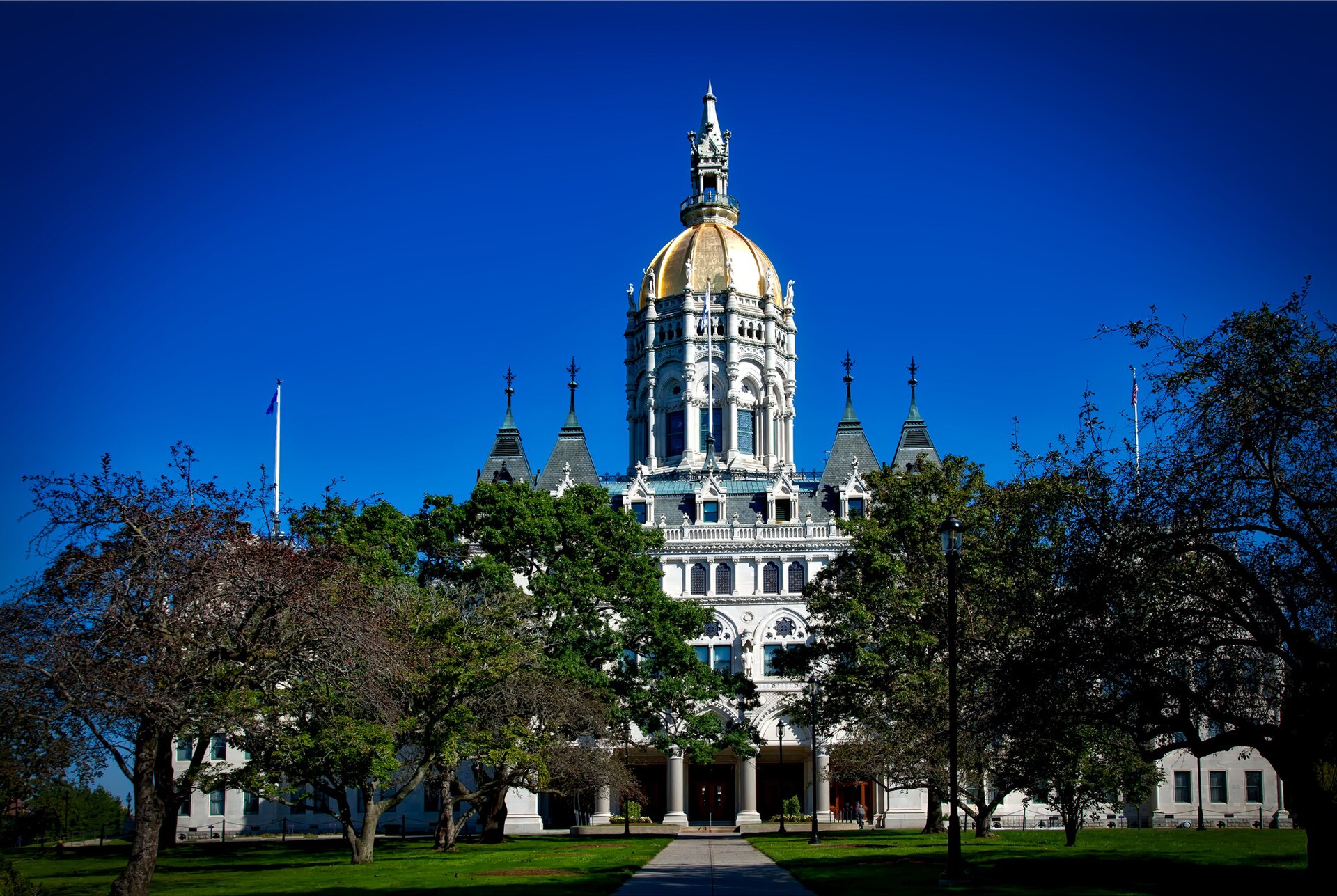
Lamont and agency representatives met at the State Capitol in Hartford on Nov. 10 for the program's annual awards ceremony. Award winners were chosen from utility bill data collected through EnergyCAP, information from agency senior sustainability officers and documented projects. The sustainability achievement award winners:
Department of Labor: a 21 percent emissions reduction between fiscal 2025 and fiscal 2026 from mechanical system and building automation upgrades at its Wethersfield headquarters.
Department of Correction: ground-mounted solar at three facilities, adding more than 2 megawatts and an estimated $11 million in lifetime savings.
Connecticut State Colleges and Universities: three fuel cell systems in New Britain, Manchester and Waterbury, installed under power purchase agreements with no upfront capital cost and expected to save about $2 million a year in utility costs.
Department of Motor Vehicles: 11 electric vehicle charging stations installed in fiscal 2025 and fiscal 2026.
University of Connecticut: a pilot using 23 Food Cycler tabletop composters in student residences.
Connecticut Housing Finance Authority: native, drought-resistant landscaping to cut irrigation and stormwater runoff. The agency's Shelly Mondo also won the Eco Champion award for a Green Team Member recognition program.
Over the past year, the program also worked with the Connecticut Green Bank to identify new solar sites at state facilities, the release said.