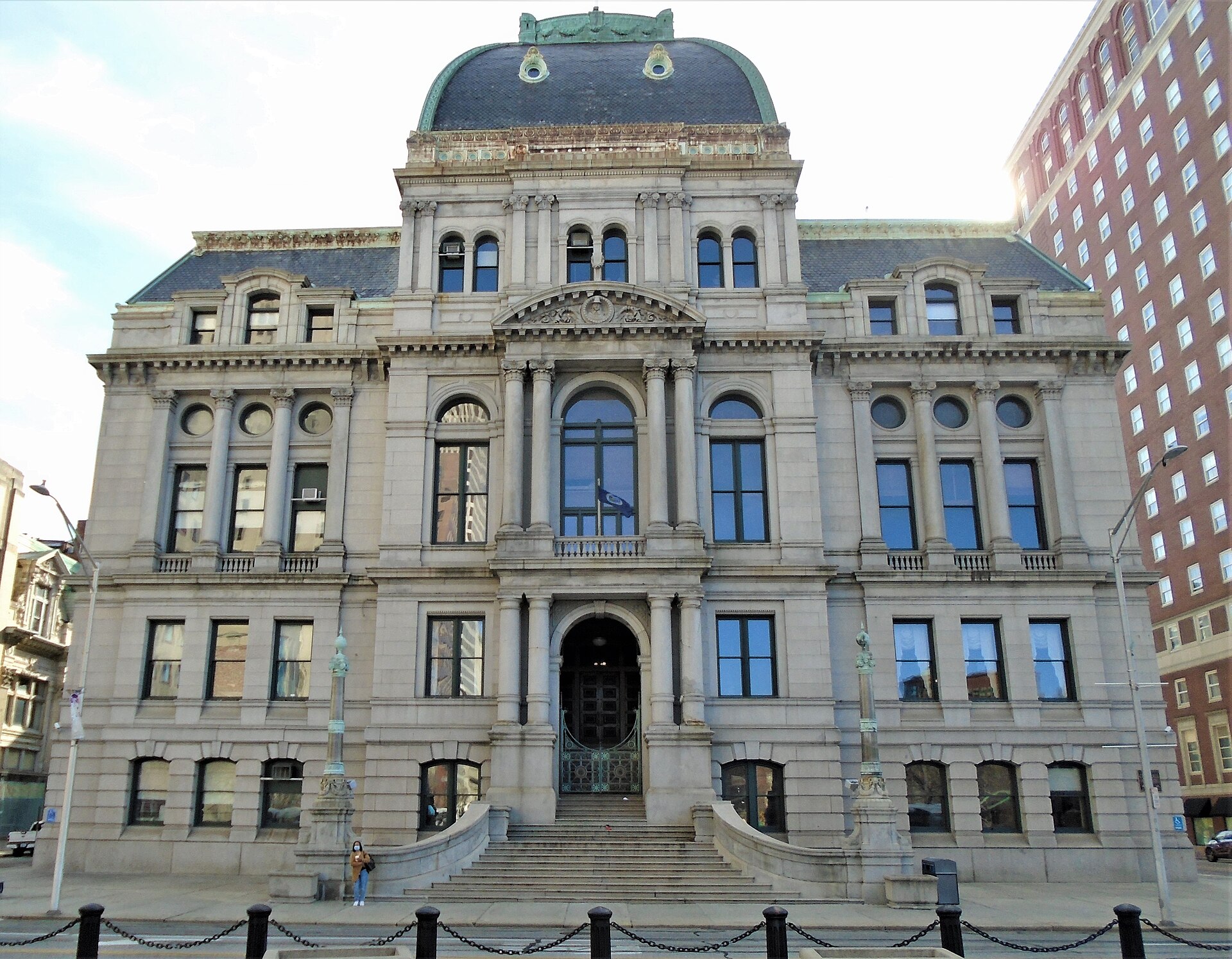
The Providence City Council's Special Committee on Ways and Means meets Tuesday, Nov. 17, with ordinances on its agenda that would give five-year property-tax breaks to an 18-apartment building on Douglas Avenue and an abandoned mill in Olneyville. The committee held a public hearing on both ordinances Oct. 21, heard public comment and took no votes, according to the meeting minutes. The Nov. 17 agenda says every item is scheduled for discussion and possible vote or other action.
The meeting starts at 5:30 p.m. in Committee "B" on the third floor of City Hall, 25 Dorrance St.
The first ordinance covers 730 Douglas Avenue. Its owner, 700-702 Douglas Avenue Realty LLC, has committed to build a four-story building with 18 residential units and two commercial units at an estimated cost of $2,045,850. Under the ordinance, the owner would pay tax on the current assessment of $229,200 in the first year, then that base tax plus 20 percent, 40 percent, 60 percent and 80 percent of the tax on the added value in the following years, before full taxation resumes.
The city fiscal note projects stabilized payments of $166,173.10 against $318,597.14 in taxes without the agreement, a difference of $152,424.04. The fiscal note covers tax years 2027 through 2031, while the ordinance text gives the term as tax years 2026 through 2030. The applicant's presentation says the building would have 15,725 square feet on Douglas Avenue at Damon Street, on RIPTA Route 50, and that the City Plan Commission has granted project approval.
The second ordinance covers 239 Oak Street, where 239 Oak St. LLC has proposed restoring a historic building for an estimated $2,990,000. The applicant's slides describe 26 apartments across three levels in a long-abandoned mill building in the Waterman Weybosset Mills complex. The same phase-in schedule applies. The city fiscal impact statement projects $123,813.86 in stabilized taxes against $364,560.00 at full taxation, a difference of $240,746.14.
Both fiscal documents carry the same warning: they are projections, and tax rates and assessments are subject to change.
Both ordinances set the same obligations. Owners must start construction within 18 months and obtain a certificate of occupancy within 36 months of the agreement taking effect, or repay the difference between what they paid and what they would have paid without the stabilization. Each owner must also pay 7 percent of the estimated taxes abated into the city Parks and Recreation Trust Fund, amortized over the term, and direct at least 1 percent of the discounted taxes to the First Source trust fund. The ordinances state that the stabilization does not mean a project complies with the zoning ordinance or has received any required board or commission approvals.
The agenda for the same meeting also lists four discussions on winter preparedness. The committee has invited the directors of Public Property and Housing and Human Services, the parks superintendent, the chief operating officer and the public works director to discuss snow removal at city buildings, parks and public rights-of-way, warming center availability and emergency shelter capacity, and coordination among departments.
The slide decks in the Nov. 17 packet are labeled for the Oct. 21 hearing.