

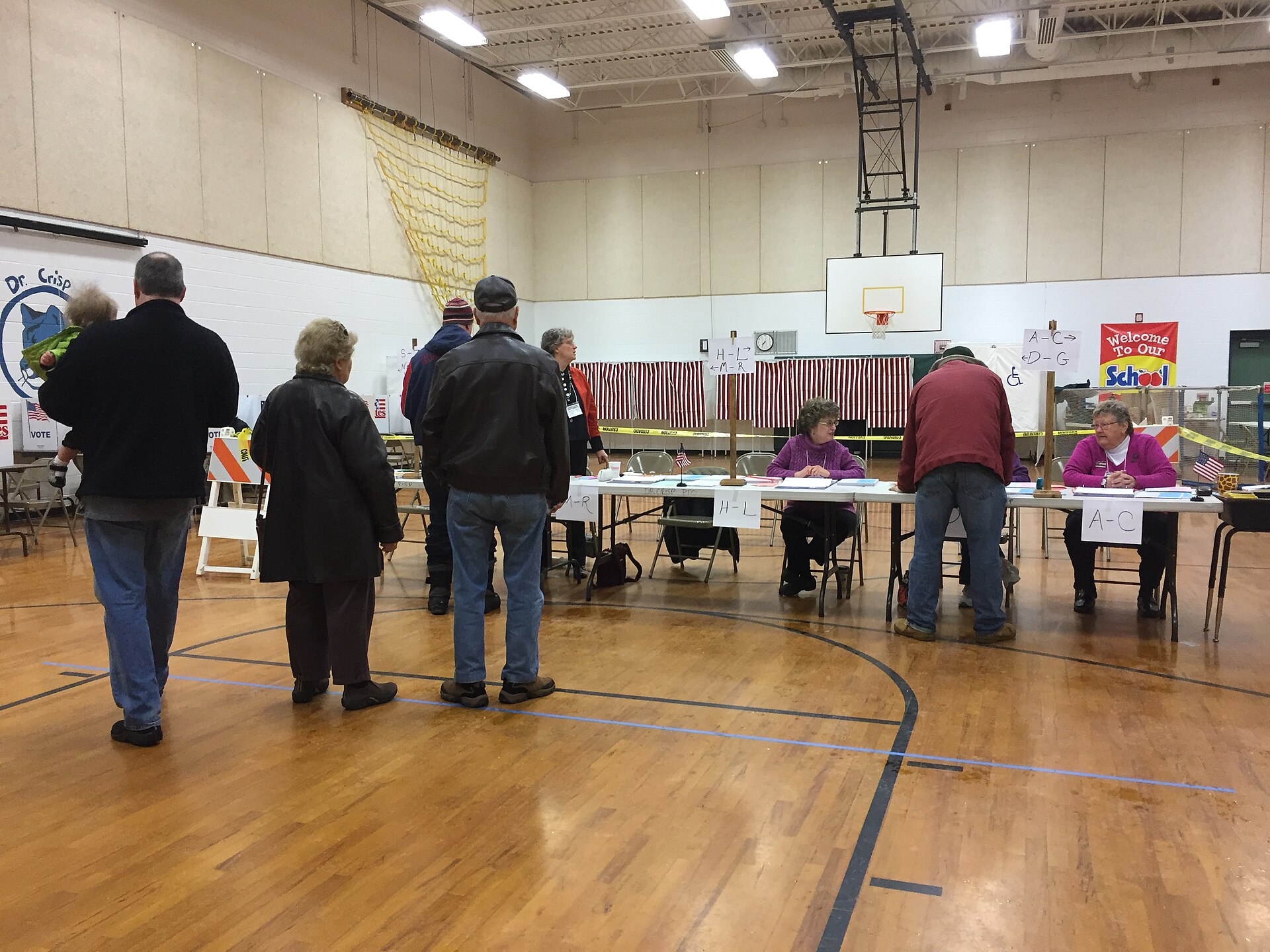
The U.S. Supreme Court has put a federal judge's orders in a New Hampshire student voter ID case on hold before the Nov. 3 election, granting the state's request while its appeal continues.
The court's Oct. 22 order pauses two preliminary injunctions that the U.S. District Court for the District of New Hampshire issued Oct. 2 and Oct. 5. The case was brought by the Coalition for Open Democracy against Secretary of State David M. Scanlan and other state officials.
The decision concerns what rules apply while the legal case proceeds. It does not finally decide the challenge.
The district court did not block HB 323, the 2026 law that removed student IDs from the list of expressly valid identification for obtaining a ballot. Its injunctions targeted the secretary of state's April 2026 guidance, which said student IDs could not be used as proof of identity when registering to vote, requesting an absentee ballot or checking in to vote. The court ordered revised guidance saying election officials may consider student IDs, along with other available evidence, under the state's safety-valve identity provisions. The Supreme Court's order puts those injunctions on hold.
The court's unsigned order relied on the principle that lower federal courts ordinarily should not change election rules on the eve of an election. It said the district court had not pointed to anything that would justify departing from that principle.
Jackson says the injunctions targeted misleading guidance
Justice Ketanji Brown Jackson dissented. She wrote that the district court's order left the state election rule untouched. In her account, it required only that the secretary of state conform his public statements to the letter of state law, rather than summarize the law in a way that could mislead voters and local election workers.
According to her dissent, the district court concluded after three days of hearings that the secretary's public statements and guidance about recently amended registration and ballot-receipt requirements were, at best, misleading. She cited testimony in which the deputy secretary of state conceded he saw no factual reason a student ID could not be reasonable evidence of a prospective voter's identity under a provision in New Hampshire's voter identification law that allows election officials to consider other reasonable proof of identity.
Correcting that guidance would prevent voter confusion, she wrote, rather than create the last-minute rule changes the court's election-timing principle is meant to prevent.
What happens next
The Supreme Court's pause lasts through the First Circuit appeal and any timely request for Supreme Court review. If the justices decline that review, the pause ends automatically. If they agree to hear the case, it lasts until the court sends its judgment to the lower court.
The secretary of state's current Election Day voting page carries a notice about the Oct. 22 Supreme Court order. It lists driver's licenses, state-issued nondriver ID cards, military IDs and passports among the expressly accepted forms of identification. The page directs voters without a listed ID to local election officials for identity verification through personal knowledge and explains how to obtain a free voting ID. Voters should contact their city or town clerk about their circumstances.
Related coverage
New Hampshire asks U.S. Supreme Court to pause student voter ID ruling
Supreme Court case docket; lower court orders filed with the Supreme Court.