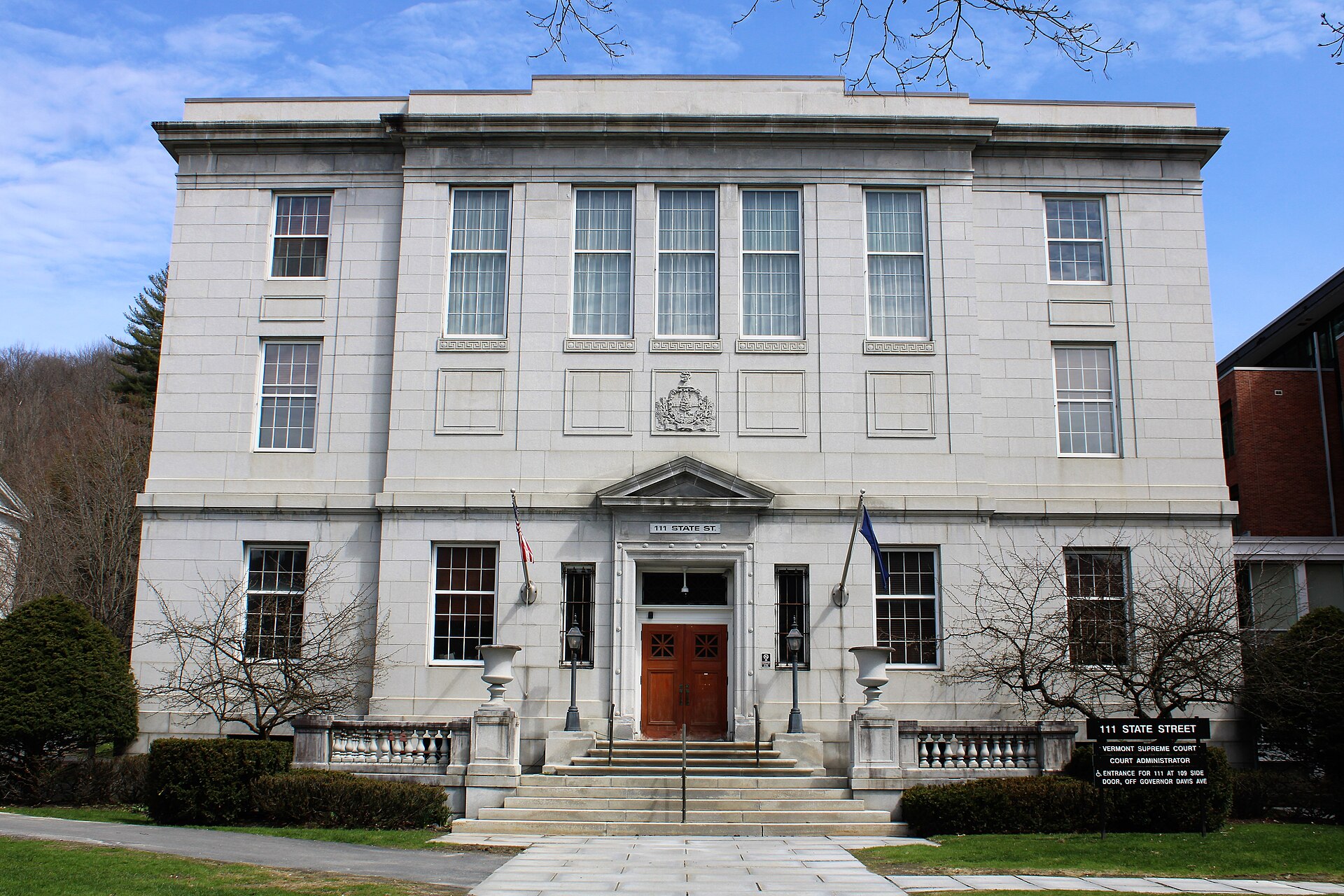
The Vermont Supreme Court on Nov. 13 reversed a Bennington County judge's order permanently dismissing a second-degree murder charge against Deven Moffitt, ruling that the judge had to weigh a 12-factor test before ending the prosecution. The case goes back to the trial court, which must decide whether the factors support dismissal with prejudice or a lesser sanction.
Moffitt was charged in June 2022 in the death of Jessica Hildenbrandt. According to the opinion (2026 VT 55), a member of the public reported finding what appeared to be a human jawbone in a Searsburg gravel pit in September 2019, and police found a shallow grave. In June 2020 the Vermont Forensic Laboratory determined that the DNA profile from the remains matched Hildenbrandt, who had last been heard from in July 2019.
On Dec. 31, 2024, one week before jury draw, the State asked to postpone the trial because it had not obtained confirmatory DNA testing. The prosecutor told the court the earlier identification came from a database match he believed would likely be inadmissible hearsay. The trial court denied the request on Jan. 3, 2025, finding that the State knew or should have known it needed the testing.
Over the weekend before trial, the U.S. Attorney's Office told the court it would not allow Moffitt, who was in federal custody on drug charges, to be transported for trial. After an emergency hearing on Jan. 6, 2025, a federal judge ordered him to appear in state court. At 2:22 p.m. that day, the State dismissed the charge without prejudice. The Bennington County State's Attorney then said publicly that she intended to refile once testing confirmed the identification.
Four days after the dismissal, Moffitt asked the court to dismiss with prejudice. In July 2025 the trial court agreed, concluding that the State had used its power to dismiss to give itself the postponement the court had denied. It also ruled that the 12 factors from the court's 1995 decision in State v. Sauve applied only to pending prosecutions.
The Supreme Court, in an opinion written by Justice Waples, sided with the trial court on its authority and against it on the factors. Citing its 1991 decision in State v. Jones, the court said a trial court can sanction a prosecutor who abuses the power to dismiss, up to and including dismissal with prejudice. But declining to consider the Sauve factors was a legal error, it said. They include the seriousness of the offense, the extent of harm, the evidence of guilt, the length of any pretrial incarceration, the effect on public confidence, and the victim's attitude toward dismissal.
The court did not decide whether the factors support dismissal here. It reversed and remanded for the trial court to exercise its discretion in the first instance. It added that dismissal with prejudice is reserved for "rare and unusual cases" and that the trial court may instead choose a lesser prospective sanction.
Deputy State's Attorney Jared Bianchi represented the State. Defender General Matthew Valerio and Appellate Defender Rebecca Turner represented Moffitt. The opinion does not say when the trial court will take up the remand.