

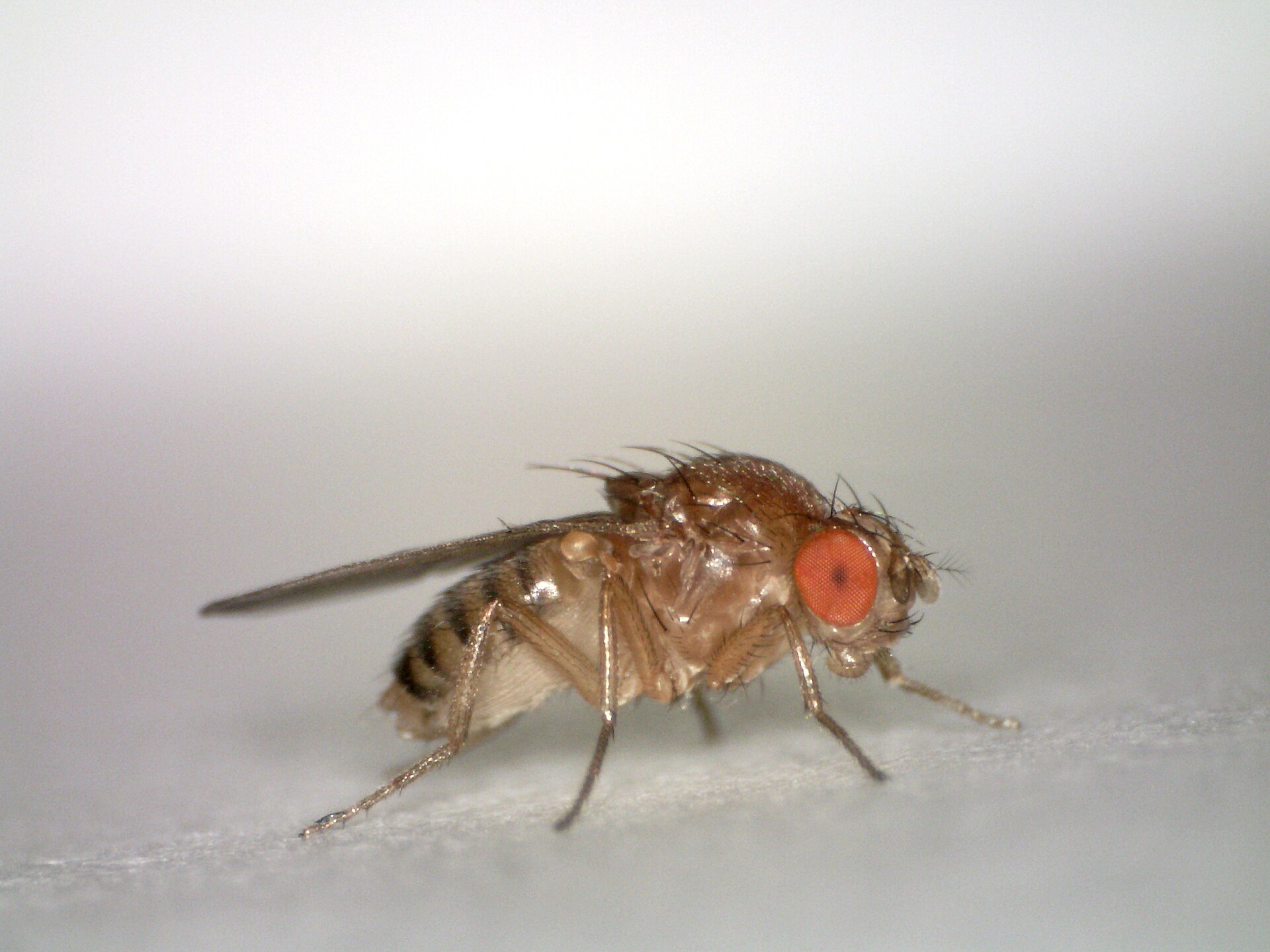
Brown University researchers have identified a brain pathway that hungry fruit flies use to respond to an odor previously associated with alcohol, offering a detailed look at how an animal's internal state can affect memory.
The study, published Oct. 19 in Current Biology, found that a single neuron producing the signaling chemical octopamine was necessary for learned alcohol preference when the flies were food-deprived.
Hunger raised the neuron's baseline activity and made it more responsive to the alcohol-associated odor. By changing the activity of selected neurons and studying connections between brain cells, the researchers traced an additional route into the flies' memory circuitry.
The result is more specific than saying hungry flies simply prefer alcohol more. The study found that hunger changed which neural pathway was needed to express a learned preference; in its initial experiments, hunger did not increase that preference in unmodified control flies when tested 24 hours after training.
The work comes from Karla Kaun's lab at Brown in Providence, with co-first authors Kavin Nuñez and Lewis Sherer. It examines fruit flies, not human patients. It does not establish that skipping a meal causes alcohol addiction or that a new treatment works in people.
The researchers describe the circuit as a way to study how bodily needs influence memories linked to rewards. Testing how comparable mechanisms work in humans would require further research.
Sources: Original study: Hunger recruits a parallel circuit encoding alcohol reward; Brown's research announcement.