

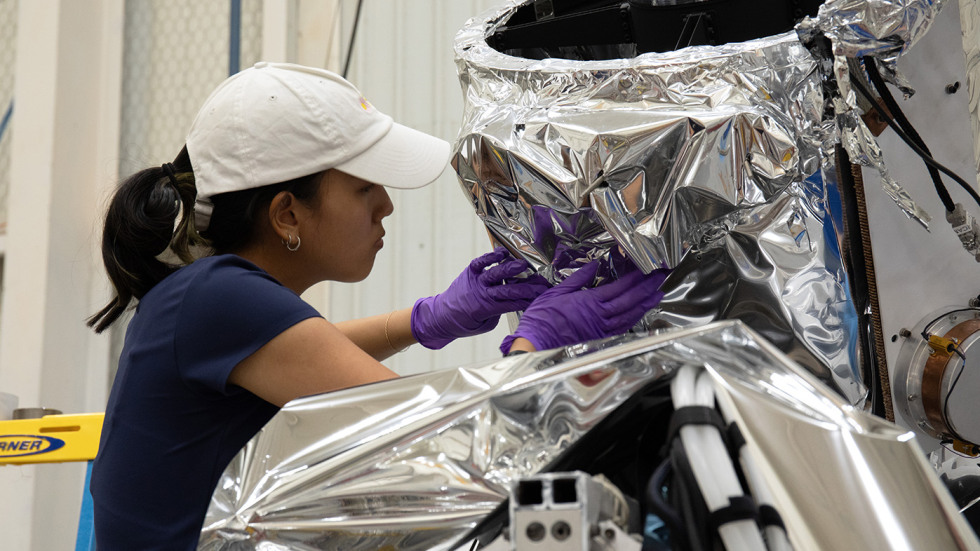
Brown University physicists and graduate students who helped build parts of NASA's EXCITE telescope are preparing to assist with its Antarctic launch. The mission will study the atmospheres of giant planets orbiting distant stars.
The university's Oct. 29 announcement says NASA's EXCITE launch window opens in December. The instrument is designed to fly beneath a balloon at about 130,000 feet, above most of Earth's atmosphere.
EXCITE stands for Exoplanet Climate Infrared Telescope. An exoplanet is a planet outside our solar system. The mission will observe hot Jupiters, large planets that orbit close to their stars, through full orbital cycles to study atmospheric conditions.
Brown professor Greg Tucker and graduate students Khing Klangboonkrong and Caitlyn Altermatt are part of the Antarctic team. Graduate student Oliver Carey will monitor the mission from Providence.
Brown said Oct. 29 that the team would depart in late October. Researchers must reassemble and check the telescope after shipment to McMurdo Station. Brown says the flight is planned for 11 to 14 days. If the balloon lands farther than expected from its touchdown area, Tucker said, the team may have to wait until next year to retrieve it. The telescope is designed to transmit data throughout the flight.