

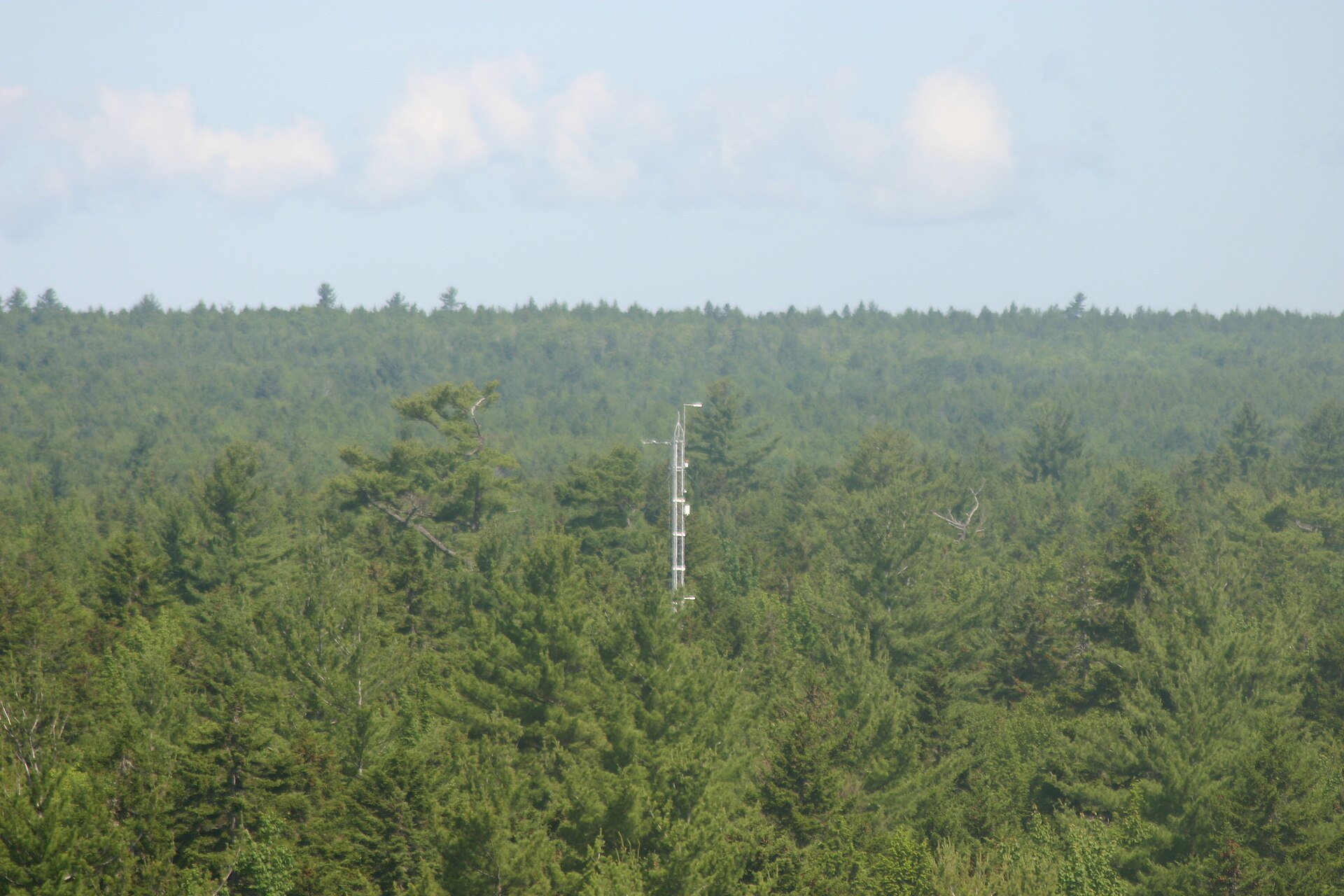
University of Maine researchers will follow a central Maine forest for four years to study how trees, seedlings and stored carbon respond after some of its timber is harvested.
The project, supported by a U.S. Department of Energy grant announced Oct. 16, will compare a section of Howland Research Forest harvested in August 2025 with a nearby area that was left unharvested, according to UMaine's project announcement.
The focus is partial harvesting: removing some trees while leaving others standing. Researchers want to understand what happens both to the trees that remain and to the next generation of growth.
Daniel Hayes, a UMaine professor who studies landscapes using mapping and remote measurements, leads the project. His team will measure tree and seedling growth, examine how branches and other wood left on the ground break down, and track carbon dioxide moving into and out of the forest.
An aircraft carrying laser-mapping equipment will record the forest's height and structure each year. The team will combine those images with tree rings, measurements from 96 forest plots and more than 25 years of carbon dioxide records.
Measurements collected before the harvest provide a starting point for comparing later changes. That makes it possible to study recovery against conditions recorded before trees were removed, rather than relying only on observations afterward.
The team plans to use the results to improve a Department of Energy model that predicts forest growth and carbon storage. UMaine says the model currently does not account for partial harvesting and recovery. The work has been announced as a research project; its results are still to come.
UMaine researchers Shawn Fraver, Xinyuan Wei, Aaron Weiskittel and Rose Z. Abramoff will work with Hayes and Oak Ridge National Laboratory.