

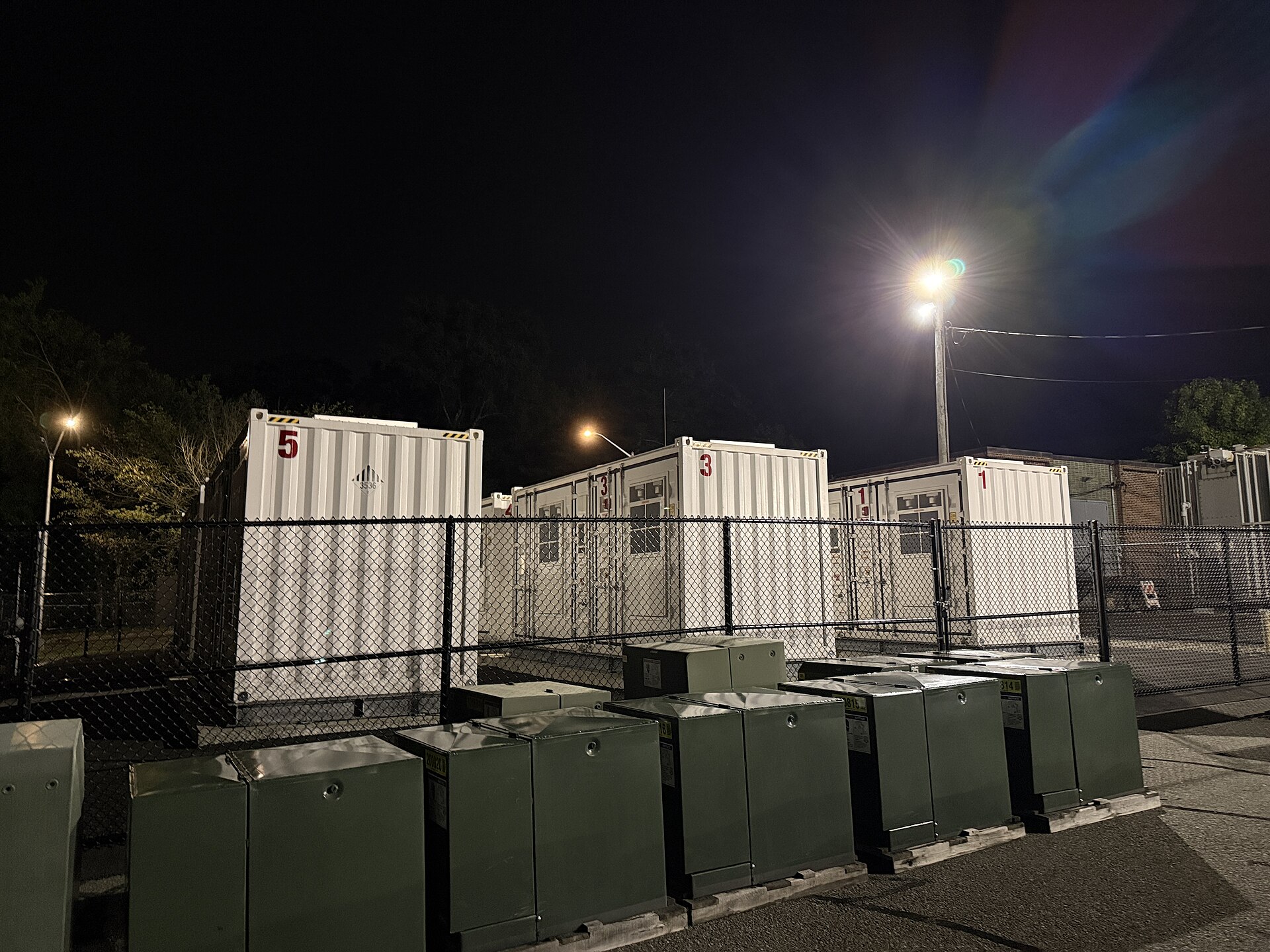
Maine's Public Utilities Commission will consider on Thursday, Nov. 12, whether to approve a state plan to contract for 200 to 300 megawatts of new energy storage, equipment that holds electricity and releases it later. Commission staff has recommended approval. The session starts at 1 p.m.
The plan is a request for proposals, the state's formal invitation for companies to bid. The Department of Energy Resources filed it on July 20, 2026, in Docket 2026-00196. In its Oct. 30 recommended decision, staff said the department could buy up to 360 megawatts. The recommended decision says the department describes that as fifteen percent of the 2025 peak load for Maine.
The State Energy Plan sets a goal of 400 megawatts of storage installed by 2030. By the Signal's arithmetic, the 200 to 300 megawatts sought here is half to three-quarters of that goal.
What bidders must meet
Projects must not yet be built, must have a nameplate capacity (maximum output) of at least 3 megawatts and site control, and must be able to deliver into the regional grid run by ISO New England. Each must also provide ratepayer benefits that exceed its costs. The department says contracts would run 20 years or less. It would score bids on a 100-point scale, with up to 70 points for quantitative factors and up to 30 for qualitative ones.
One contract term
The recommended decision is written in the form of a commission order but is only a staff recommendation. It approves the plan as the department revised it on Sept. 11, including the standard form contract, while saying the commission has "expressed concerns about certain provisions" of that contract.
One of those provisions, in article five, lets the department check whether a seller delivered promised economic benefits, such as in-state jobs, and cut the contract price by up to 30 percent if it did not. Staff wrote that the commission makes no finding on whether the department has legal authority to run that process and does not count those benefits when judging ratepayer costs and benefits. Staff also wrote that article-five disputes should not be brought to the commission.
Approval on Nov. 12 would not pick a project. Any contracts the department awards would be reviewed in a separate docket.
Who has weighed in
Twelve parties intervened, among them Central Maine Power, Versant Power, the Office of the Public Advocate, Efficiency Maine Trust, Form Energy and the Industrial Energy Consumers Group. Written objections to a recommended decision are called exceptions. The docket shows exceptions from the Industrial Energy Consumers Group, Alt Engineering and RENEW Northeast on Nov. 9, and comments from the department and Form Energy on Nov. 6. Peter Evans, an individual, filed a late petition to intervene on Nov. 4 and comments or exceptions on Nov. 8; the docket shows no ruling on his petition. The docket lists these filings but not what they ask for, and their contents were not reviewed for this article.
An Oct. 22 order also required the department's outside law firm, Verrill Dana, which has represented renewable developers before the commission, to take internal measures, including that the attorneys representing the department not represent bidders in the department's procurements.
The Nov. 12 agenda lists the recommended decision for "consideration." Deliberations are open to the public and streamed through the commission's website. The agenda notes that items may be removed, so anyone planning to attend should confirm the schedule that day at 207-287-3831.