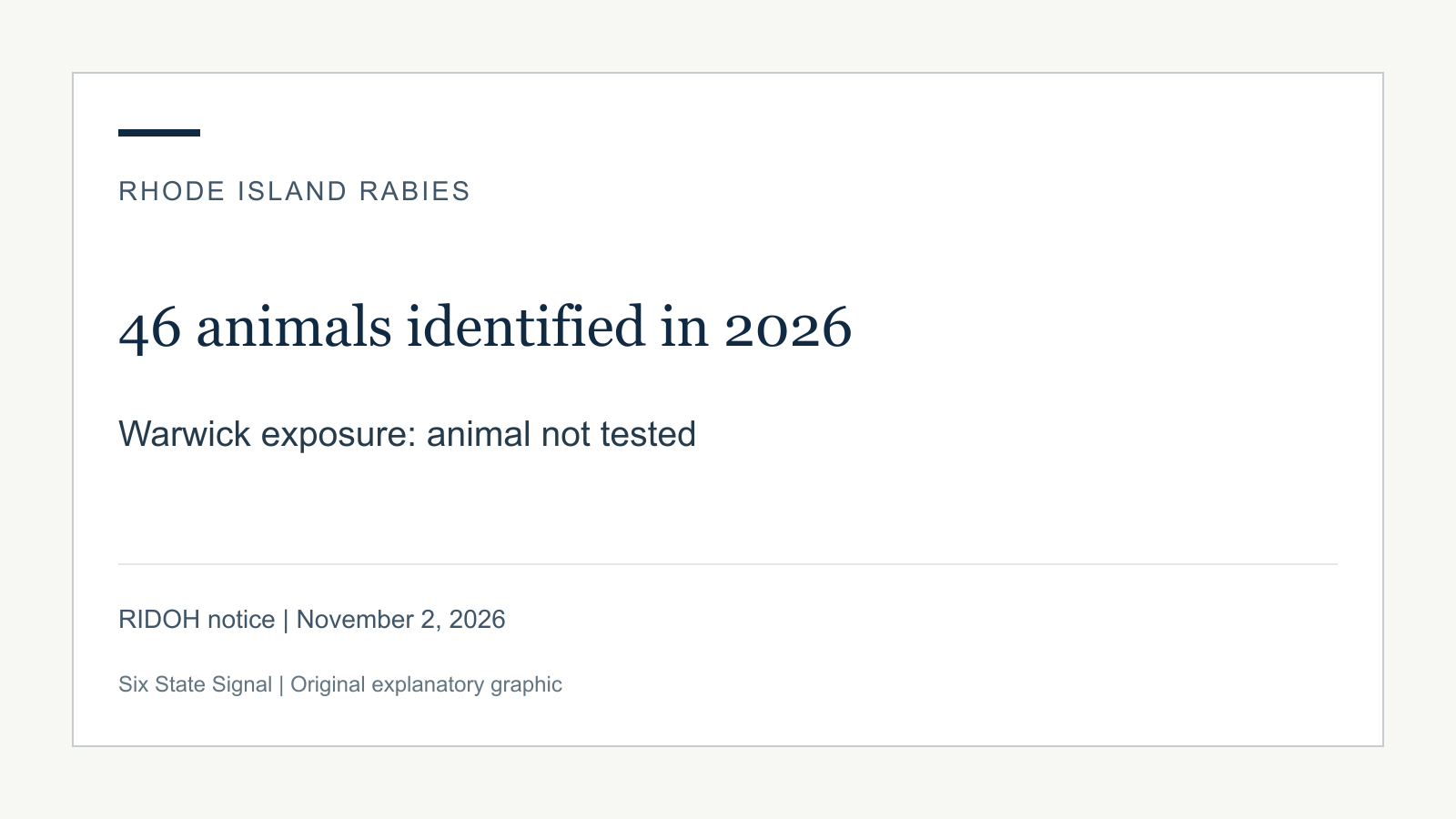
A person in Warwick's Payton Avenue area began preventive rabies treatment Nov. 1 after being bitten or scratched by a raccoon, the Rhode Island Department of Health said. The animal was not captured or tested, so its infection status is unknown.
The department's Nov. 2 notice comes as Rhode Island reports 46 rabid animals identified during 2026. That is above the annual average of 25 recorded from 2021 through 2025. Those figures count rabid animals that have been identified, not every infected animal in the state.
Raccoons, bats and skunks account for most of this year's identified animals. The department also lists a cat, a coyote and a woodchuck. The Warwick raccoon has not been confirmed rabid because it was not captured or tested.
The distinction matters for anyone deciding whether to seek help. An animal does not have to be available for a laboratory test before a possible exposure can be assessed. The department asks people who may have had direct contact with a raccoon in the area to call its infectious disease staff immediately.
The assessment line is 401-222-2577 on weekdays from 8:30 a.m. to 4:30 p.m. The after-hours number is 401-276-8046. A nurse can review what happened and determine whether preventive treatment is appropriate. The announcement does not identify the person who began treatment or provide a precise address for the encounter.
Rabies affects the central nervous system and is fatal if it is not treated before symptoms begin, according to the department. Post-exposure treatment must begin as soon as possible after an exposure and before symptoms appear. Someone concerned about direct contact should seek an assessment rather than wait to see whether symptoms develop.
Pet owners have a separate reason to act. If an animal may have encountered the raccoon, officials advise contacting the Health Department, the local animal control officer and the pet's veterinarian. Rhode Island requires dogs, cats and ferrets to have current rabies vaccinations.
The department recommends keeping pets under control, avoiding contact with wildlife and free-roaming domestic animals, and reporting animal bites to local animal control. Feeding animals outdoors and leaving garbage uncovered can draw wildlife close to homes. Dogs should be leashed or kept in a fenced area, and pets should not wander unsupervised.
RIDOH's rabies dashboard includes specimen collection dates and locations under Animal Rabies Mapping. RIDOH's Nov. 2 notice is the source of the 46-animal count; a later dashboard update may change that figure.