Rhode Island middle and high school students reported less substance use and bullying in the 2026 Rhode Island Student Survey than in its 2024 edition. The report also found that many students who struggled with mental health had not spoken with a school counselor.
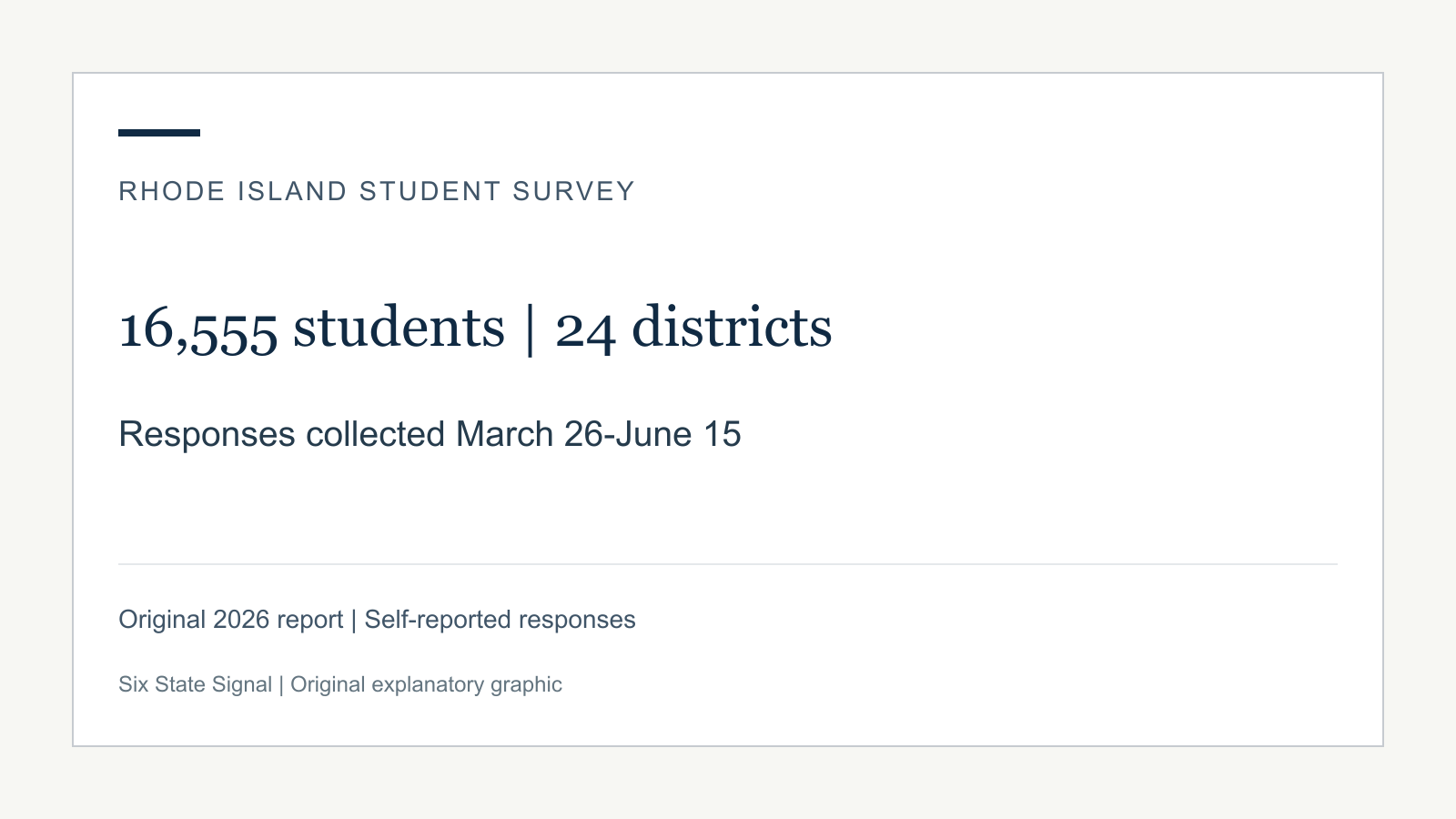
The survey, administered from March 26 through June 15, received responses from 16,555 students in 24 school districts. It is a collaboration among the state departments of Behavioral Healthcare, Developmental Disabilities and Hospitals, Health, and Education. The original report was posted on the state's epidemiology website in October.
Its findings concern what participating students reported about themselves. They are not clinical diagnoses or a count of every child in Rhode Island. The report compares different survey years, and the group of participating schools can change.
Among high school respondents, 20% reported having consumed alcohol at some point, and 14% reported ever smoking or vaping marijuana. The report marks both as statistically significant decreases from 2024. It also identifies significant declines in lifetime vaping and use of marijuana edibles among high school students.
Recent use fell on several measures as well. High school respondents reported significant decreases in past-30-day marijuana smoking or vaping, alcohol, vaping and nicotine pouch use. Middle school respondents reported decreases across a broader list of substances. Lifetime use and use within the past month are different measures and should not be read interchangeably.
Students' reports about access changed too. High school respondents described several substances as harder to obtain than in 2024, including alcohol, vapes and marijuana. The report says family members were the most commonly reported source of free alcohol, while friends were the most commonly reported source of free marijuana.
The survey also found statistically significant decreases in both experiencing and perpetrating bullying and cyberbullying among middle and high school students. Reported feelings of sadness or hopelessness and serious consideration of suicide declined. These trends describe survey responses; the comparisons do not establish which policy or prevention program caused them. Among students who had considered suicide, reported attempt rates continued to rise among middle schoolers and fall among high schoolers. The report does not mark those changes as statistically significant.
Substantial needs remain. Some 29% of middle school students and 34% of high school students reported struggling with mental health during the previous year. Among those students, 32% of middle school respondents and 31% of high school respondents said they had spoken with a school counselor in person or online.
Those counselor figures do not establish that the remaining students received no help. The question is specifically about school counselors, and students may have sought support elsewhere. The figures show that most students who reported struggling had not talked with a school counselor.
The approximately 30-minute online questionnaire is available in English and Spanish. Participation is voluntary, local parent permission procedures apply, and the survey does not collect personally identifying information. A grade at a school must reach 60% participation for its results to be included in the final reports.
For comparisons with 2024, researchers used logistic regression to account for potential differences in grade and town participation. They treated a p-value below 0.05 as statistically significant. The report says those comparisons do not control for differences in which schools participated, a limitation that matters when interpreting changes over time.
People in suicidal crisis or emotional distress can call or text 988, the Suicide & Crisis Lifeline, or use its online chat at https://988lifeline.org.